
Notice where your day quietly gets stolen
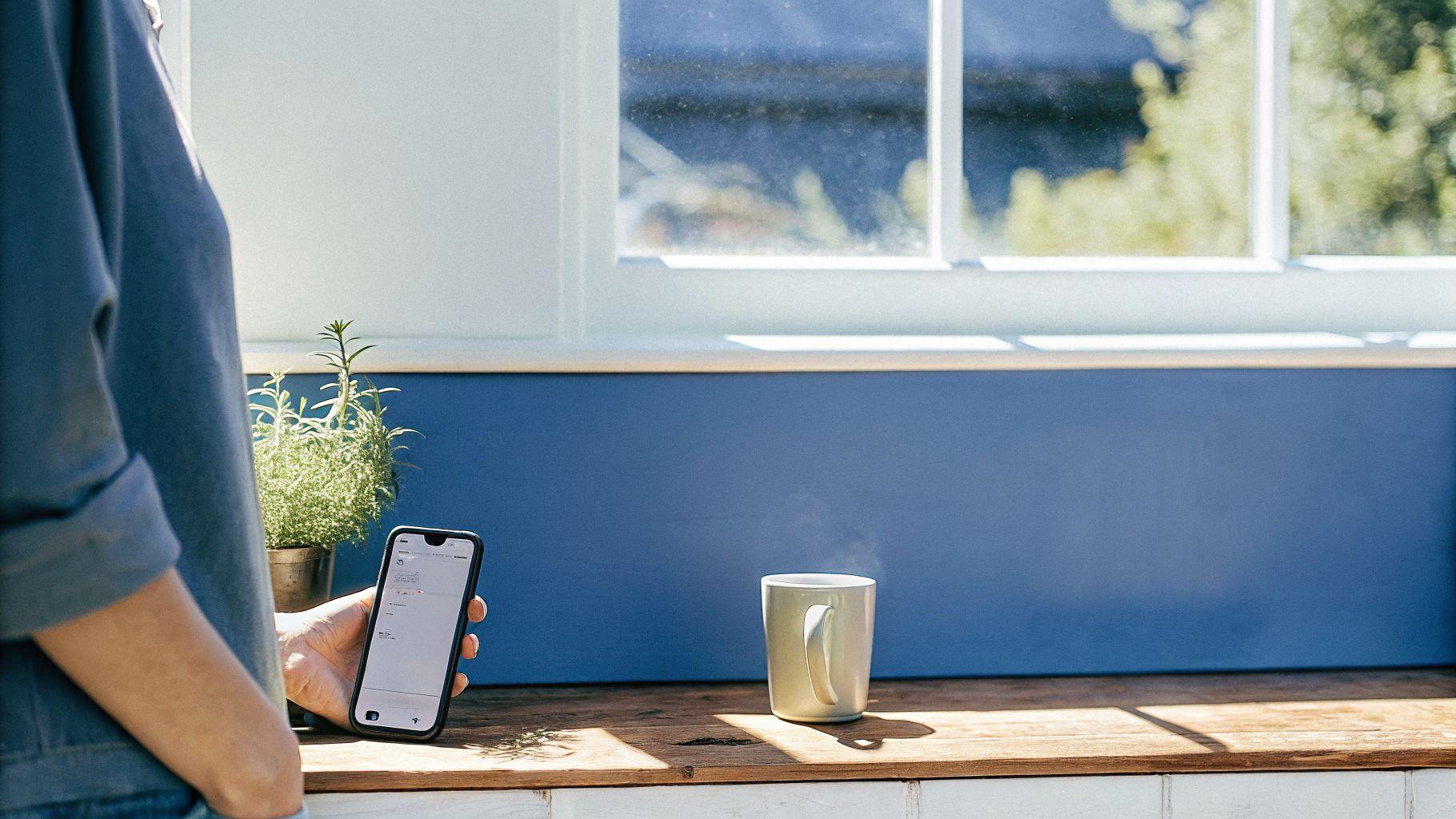
The moment usually looks ordinary: you’re halfway through an email, your phone lights up, a notification pings, and ten minutes later you’re deep in a thread about someone else’s life wondering, “How did I get here?” That tiny gap—between what you meant to do and what you actually did—is where the art of life lives. Not in a perfect morning routine or a month-long retreat, but in the micro-moments where you either drift on autopilot or quietly take the wheel back.
In my coaching work, Irena Golob often sees this pattern in thoughtful, high-performing people: they’re not lacking ambition or tools. They’re lacking space—between trigger and response, between urge and action, between “I should” and “I choose.” The question underneath most of their questions is simple: Is mindfulness realistic in a normal, busy life—or is it just something people say on podcasts?
If your days feel like they “just happen” to you, you’re not broken—you’re human. A large chunk of waking life runs on automatic patterns (what many psychologists call fast thinking). Some popular estimates suggest this autopilot mode can be as high as 95% of daily behavior, depending on how it’s measured.1 That sounds dramatic, but you’ve felt it: driving home and barely remembering the route, opening your phone “for one thing” and resurfacing later, saying yes before you’ve even checked in with yourself.
Autopilot is efficient for brushing your teeth; it’s risky for designing a life.

Redefine mindfulness as “returning,” not “staying mindful” (the art of life move)
Here’s the reframe that relaxes people almost immediately: mindfulness is not a milestone; it’s a practice. The goal is not to be “mindful all day.” The goal is to notice more often when you’re not—and to return without drama.
One client said it in a way I’ve never improved on:
“I used to think mindful people were ‘on’ all day. But it’s more like small moments where you catch yourself again. The forgetting part just comes with it.”
That’s not a flaw; it’s the training. From a behavioral standpoint, every “return” strengthens the circuits that support awareness and self-regulation. From an art-of-life standpoint, every return is a brushstroke on the canvas of who you’re becoming.
So if you’re busy in 2026—and you are—aim for frequency over intensity. Ten tiny returns scattered through your day will change more than one heroic meditation session you can’t sustain.
A simple rule I give readers of my Website when they want something practical: don’t measure success by how calm you feel. Measure it by how quickly you notice and choose again. That’s emotional control in real life: not never reacting, but catching the reaction sooner.
FAQ: Is mindfulness in daily life really possible (without formal meditation)?
Yes—if you redefine mindfulness as returning rather than trying to “stay mindful.” Instead of adding long sessions to an already full schedule, use micro-pauses built into existing routines (like the first sip of coffee, the first minute of lunch, or one breath before replying). Each small return is a practical way to practice the art of life: you notice the drift, interrupt the habit loop, and choose the next action on purpose.
Use “anchor moments” so you don’t have to add more to your schedule
The most sustainable answer I’ve seen—in research, clients, and my own life—is: don’t add new activities; change the way you inhabit the ones you already do. Routine becomes your training ground.
Try this as an experiment (not a rule). Pick one anchor activity in each part of the day:
- Morning: the first sip of coffee/tea, or the first time you wash your hands
- Midday: the first 60 seconds after you sit down to eat
- Evening: brushing your teeth, stepping into the shower, or locking your front door
For 30–60 seconds, you’re not trying to be serene. You’re simply noticing: temperature, taste, sounds, posture, breath, and the urge to multitask. When your mind wanders (it will), you guide it back gently. That’s the whole rep.
If you want structure, use this mini-sequence:
- Step 1: Arrive. Feel your feet or your seat for one breath.
- Step 2: Sense. Name three sensory details (warmth, pressure, sound).
- Step 3: Choose. Ask, “What is the next best action on purpose?”
These are small pockets of awareness inserted into “boring” moments—exactly where autopilot is strongest.
Interrupt habit loops with the deliberate pause (presence + creativity)
Presence is one half of artful living; creativity is the other. Not creativity as in painting, necessarily—but the ability to create your response instead of recycling old conditioning. When life speeds up, most derailments follow a habit loop: trigger → behavior → reward.
Examples you’ll recognize:
- Stress → open social media → brief relief
- Boredom → snack → stimulation
- Tension in a meeting → over-explain → temporary control
Mindfulness doesn’t delete these loops. It gives you a place to intervene: the urge. That’s your doorway.
Try the deliberate pause, a tool Irena Golob uses often with busy professionals:
- Pause for one slow breath.
- Label the moment: “This is an urge.” (Not a command.)
- Feel it in the body for 5–10 seconds (buzzing hands, tight chest, restless legs).
- Ask one creative question: “What am I about to create with this next action?”
That question keeps it practical. A calmer conversation? More resentment? A bit of rest? A step toward a value that matters to you?
Sometimes you’ll still do the old habit. That’s not failure; it’s data. You’re building the muscle of awareness—without shame, which is important because shame tends to shove people straight back into autopilot.
Now zoom out to productivity and enjoyment. Many people assume a trade-off: either you’re intentional and relaxed, or you’re effective and busy. But autopilot often masquerades as productivity: full calendar, constant responsiveness, zero reflection.
Try this two-minute intention ritual before you open your inbox:
- Name one priority: “If I do only one thing with real presence today, it’s this.”
- Name one value: clarity, steadiness, courage, kindness, precision.
- Protect a small block: even 25 minutes of undivided attention is a statement of self-respect.
Enjoyment doesn’t require a vacation; it requires available attention. You can’t savor a walk, a conversation, or a meal if your mind is continuously hijacked by borrowed urgency from your devices.
Make it a week-long experiment (and let it be imperfect)
If this sounds like a lot, treat it as an exploration—not a performance review. You will forget. You will get pulled into your phone. You will say yes when you meant no. The practice is how quickly—and kindly—you come back.
Use these prompts for the next 7 days:
- “Where did I notice myself today?” (Even once counts.)
- “Where did autopilot run the show?” (No judgment; just information.)
- “What’s one tiny pause I’ll try tomorrow?” (Keep it small enough to do on a bad day.)
The people who quietly transform their lives aren’t the ones who overhaul everything. They’re the ones who keep practicing these almost invisible moves: a breath here, a question there, a slightly braver choice when it would be easier to default. That’s what mastering the art of life looks like up close: a daily practice of noticing, pausing, and choosing—again and again—until your days start to feel like they actually belong to you.
This is for informational purposes only and not a substitute for professional advice. Consult a qualified expert for personal guidance.
- The “95% autopilot” figure is a commonly cited estimate for how much behavior runs on automatic processes; exact percentages vary by study and methodology. ↩